Authors:
Art & the Public Sphere, Volume 14, Issue Afterlives of Public Art, Dec 2025, p. 131 – 148
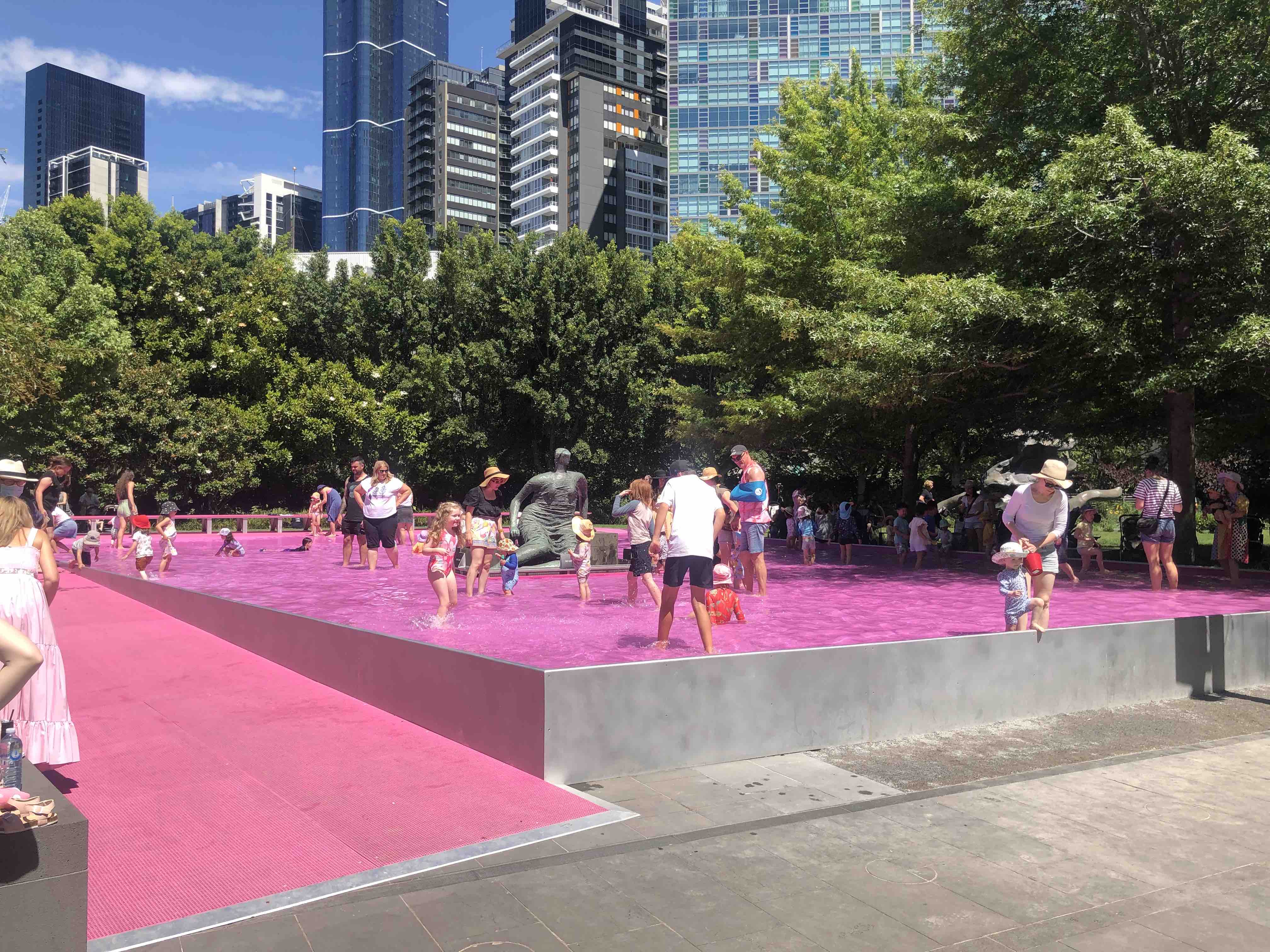
The National Gallery of Victoria (NGV, AU) hosts an annual, two-stage, national open call for the NGV Architecture Commission, asking teams of artists, architects and designers to create a temporary, site-specific work at the NGV. In 2021, James Carey, in collaboration with architects Taylor Knights, was awarded this commission. Their scheme pond[er] addressed current ecological adversities through a response that touched the ground lightly, using water and flora as its core materials. It was a space that became part of the existing ecology of the NGV rather than a separate sculptural object. Democratic and universally accessible, pond[er] raised awareness about water and land systems custodianship, and proposed that all materials used would be redistributed to various organizations at the conclusion of the commission. Since the NGV Architecture Commission’s inception, many of the past projects’ materials have been salvaged and sent to The Quarry, an experimental project for material reuse south-west of Melbourne. In 2022, materials from pond[er], including a lengthy boardwalk, were transferred to The Quarry for reuse. Caitlyn Parry’s research project, Mongrel Assemblies, exhibited at the Design Hub Gallery Melbourne as part of the Now of Never festival, explored digital tools and platforms that inventory construction materials, such as those from the NGV commissions sent to The Quarry. BuildingBits is an NFT platform developed to couple construction materials with its 3D model and associated metadata. The un-breakability of data to a 3D file means its provenance (connection to Indigenous Country and cultural narratives) is embodied in the file. The platform enables designers to download the materials’ file in conjunction with its associated data for future designs. This article contests static ways of conceiving of the public art ‘object’, by advocating for a wider temporal lens of what constitutes public art. It seeks to privilege unbuilding, material redistribution and the archiving of materials used in public projects. Furthermore, this article challenges the commissioning processes associated with public artworks beyond the ‘output’ by discussing further processes of inventorying, pausing and extending the agency of material. As creative practitioners, we have a moral and ethical responsibility to be thinking of the afterlives of all built and speculative projects.